 Caroline Blanca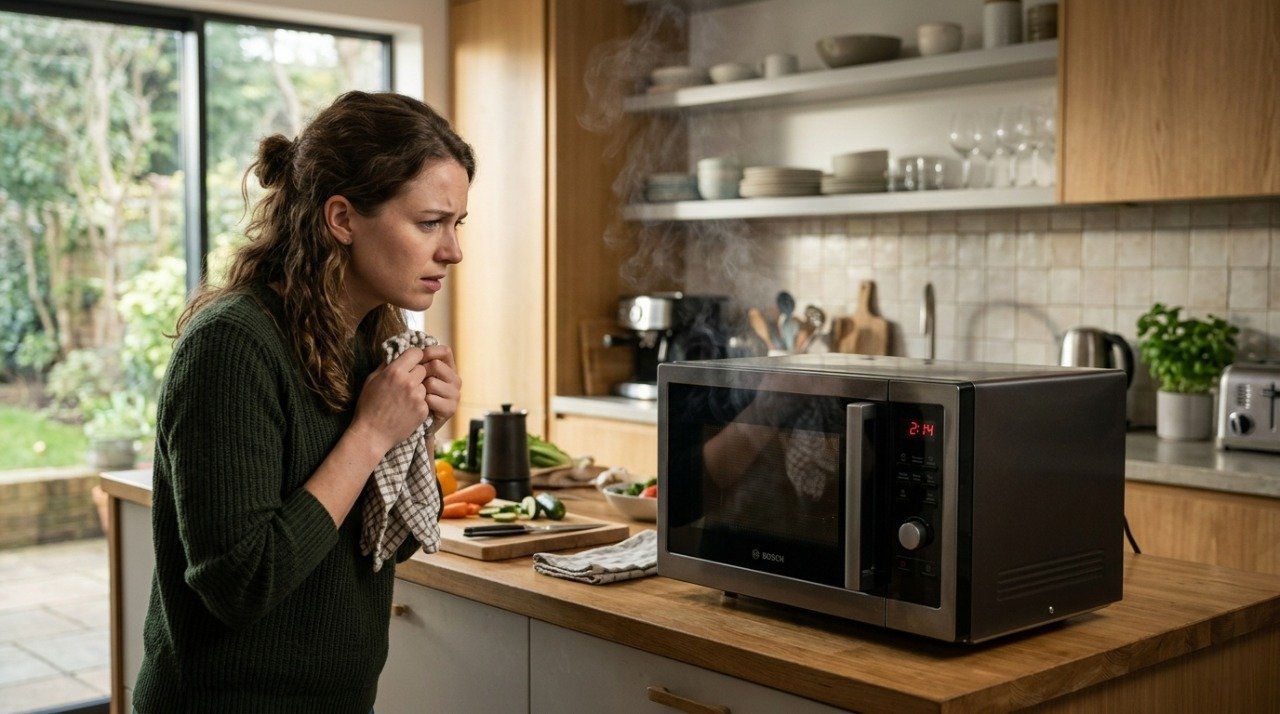
You open the microwave door and immediately notice it — that sharp, acrid smell of burning plastic. It is not just unpleasant. In most cases it is a warning sign that something inside your microwave needs attention right now, before the problem gets worse.
The good news is that a burning plastic smell does not automatically mean your microwave is broken beyond repair. However, it does mean you should stop using it until you have identified the cause. Here is exactly what to check and what to do.
Quick Answer
A burning plastic smell from your microwave is most commonly caused by melted food residue on the interior walls, a non-microwave-safe container that was used by mistake, a failing internal component like the waveguide cover or magnetron, or a new microwave burning off its factory coating for the first time. Identify which applies to your situation before using the microwave again.
Stop Using the Microwave Immediately
Before going through the causes, this step is non-negotiable. If your microwave is producing a burning plastic smell, stop using it until you have identified the source. Continuing to run a microwave that has a burning internal component is a fire risk — and in some cases a health risk if the fumes are coming from melting plastic or a failing electrical part.
⚠️ Important: If the burning smell is accompanied by visible smoke, sparking, or any unusual sounds, unplug the microwave from the wall immediately. Do not open the door until any sparking has completely stopped. If the smell persists after unplugging, leave the room and ventilate the area.
Cause 1: Food Residue Burning on the Interior Walls
Most Common Cause
Splattered food residue from previous cooking sessions
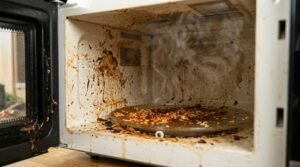
Over time, small amounts of food — grease, sauce, and liquid — splatter and stick to the interior walls, ceiling, and turntable of your microwave. When the microwave runs again, that residue heats up, burns, and produces a sharp smell that can easily be mistaken for burning plastic.
This is by far the most common cause of a burning smell in a microwave and fortunately the easiest to fix.
How to fix it:
- Unplug the microwave and allow it to cool completely before cleaning
- Remove the turntable and wash it separately with warm soapy water
- Wipe the interior walls, ceiling, and floor with a damp cloth and a small amount of washing up liquid
- For stubborn burnt-on residue, place a bowl of water with a few slices of lemon inside and microwave on high for 3 minutes — the steam loosens the residue and makes it easy to wipe away
- Dry the interior thoroughly before plugging back in and using again
Cause 2: A Non-Safe Plastic Container Was Used
Very Common Cause
A plastic container or wrapping that was not microwave safe
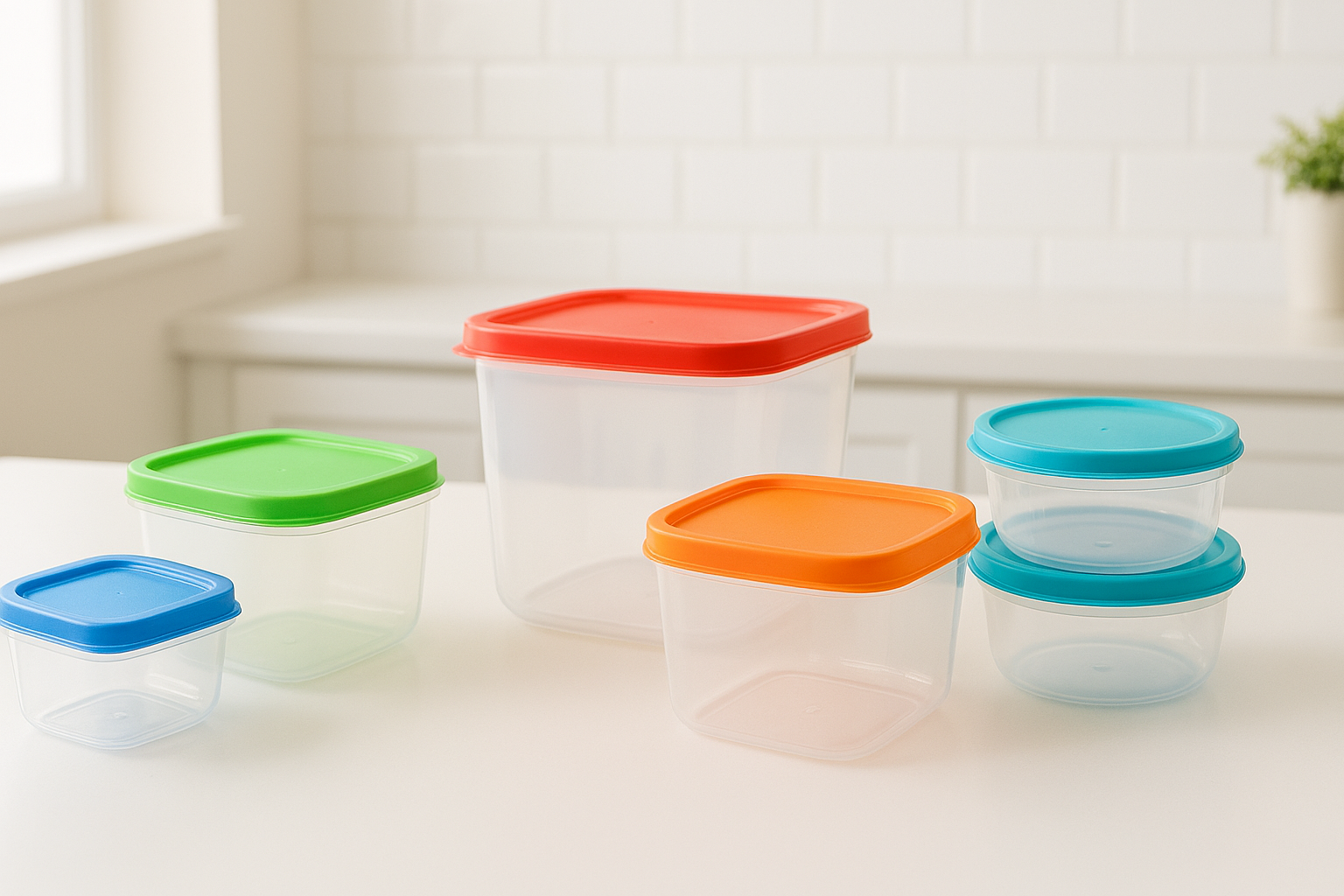
Single-use takeaway containers, plastic bags, cling film without a microwave safe label, and styrofoam containers all release a burning plastic smell when exposed to microwave heat. In some cases the container visibly melts. In others it holds its shape but the heat causes the plastic to off-gas compounds that produce the smell and potentially contaminate the food.
How to fix it:
- Remove any plastic residue from the turntable and interior walls using a damp cloth — allow the microwave to cool first
- If plastic has melted onto the turntable, soak it in warm soapy water for 15 minutes before wiping
- Discard any food that was in direct contact with melted or overheated plastic
- Going forward, always check the base of any container for a microwave safe label before use — read our full guide on whether plastic containers are microwave safe for a complete breakdown of what to look for
Cause 3: It Is a Brand New Microwave
Normal — First Use Only
New microwaves burn off their factory protective coating on first use
If your microwave is brand new and you notice a plastic or chemical smell during the first one or two uses, this is completely normal. LG microwaves and most other brands apply a protective coating to internal components during manufacture. On first use, that coating burns off and produces a mild plastic or chemical smell that disappears after a few sessions.
How to handle it:
- Run the microwave empty on high power for 2 minutes with a cup of water inside — never run a microwave completely empty as it can damage the magnetron
- Ventilate the kitchen by opening a window during the first few uses
- The smell should disappear completely within the first 3 to 5 uses
- If the smell persists beyond 5 uses or becomes stronger over time, it is no longer a new microwave issue and should be investigated further
💡 Tip: When using a brand new LG microwave for the first time, place a microwave safe bowl of water inside before running it. This absorbs some of the heat and reduces the intensity of the initial burn-off smell significantly.
Cause 4: The Waveguide Cover Is Damaged or Dirty
Moderate Cause
The waveguide cover inside the microwave is burnt or contaminated
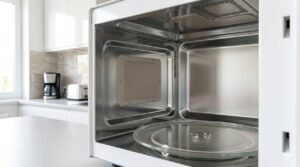
The waveguide cover is a flat panel — usually made from mica or a plastic composite — mounted on the interior side wall of your microwave. Its job is to protect the magnetron from food splatter. Over time, grease and food residue build up on it and eventually burn during cooking, producing a strong burning smell and sometimes sparking.
How to check it:
- Unplug the microwave and look at the interior side wall — the waveguide cover is usually a rectangular panel on the right side wall
- Look for burn marks, brown discolouration, or pitting on the surface
- If it is simply dirty, clean it gently with a damp cloth — do not use abrasive cleaners or scrubbers
- If it has visible burn marks or holes, it needs to be replaced — a damaged waveguide cover can cause arcing and further damage to the magnetron
Replacement waveguide covers for LG microwaves are inexpensive and widely available online. Search your LG model number followed by “waveguide cover” to find the correct part.
Cause 5: A Failing Internal Component
Serious Cause — Stop Using Immediately
An internal electrical component is overheating or failing
In some cases a burning plastic smell is not from food or a container at all — it is coming from inside the microwave’s electrical system. The magnetron, capacitor, diode, or wiring can all produce a burning smell when they begin to fail. This is the most serious cause and the one that requires immediate action.
Signs this is the cause:
- The smell occurs even when the microwave is running completely empty
- The smell is accompanied by unusual sounds — buzzing, humming, or crackling
- The microwave is not heating food properly despite running normally
- The smell has appeared suddenly in a microwave that was previously fine
- You notice the smell coming from the back or sides of the unit rather than the interior
⚠️ Do not use the microwave if you suspect an internal component failure. Unplug it immediately and contact LG support at lg.com/support or take it to a certified appliance technician. Internal electrical faults in microwaves are not safe to diagnose or repair at home.
Quick Diagnosis: What Type of Smell Is It?
| Smell Description | Most Likely Cause | Action |
|---|---|---|
| Faint burning, comes and goes | Burnt food residue on interior walls | Deep clean the interior — Cause 1 |
| Sharp plastic smell, container looks warped | Non-safe plastic container used | Remove residue, discard food — Cause 2 |
| Mild chemical smell, brand new unit | Factory coating burning off | Normal — ventilate and continue — Cause 3 |
| Burning smell with sparking or browning on wall panel | Waveguide cover damaged or dirty | Clean or replace waveguide cover — Cause 4 |
| Strong electrical burning smell from sides or back | Internal component failing | Unplug immediately — contact technician — Cause 5 |
How to Prevent a Burning Smell in Your LG Microwave
In most cases, prevention is straightforward. The majority of burning smells come from food residue build-up and non-safe containers — both of which are entirely avoidable with two simple habits.
- Clean the interior regularly — wipe down the walls, ceiling, and turntable after any session that involved splattering. A quick 30-second wipe prevents residue from baking on and burning in future sessions
- Always check containers before microwaving — flip every container and check the base for a microwave safe label. If there is no label, transfer the food to a glass or ceramic dish. Read our guide on microwaving plastic containers safely for the full breakdown
- Cover food loosely — use a microwave safe lid or damp paper towel to prevent splattering rather than cleaning it afterwards
- Never run the microwave empty — always have food or a cup of water inside when running it. An empty microwave concentrates the energy and can damage internal components
When to Call a Technician
You should contact a technician if the burning smell persists after cleaning the interior thoroughly and you have confirmed no non-safe containers were used. Furthermore, if the smell is accompanied by sparking, unusual sounds, or the microwave has stopped heating food properly, do not continue using it.
Before calling a technician, check whether your LG microwave is still under warranty. LG offers a standard 1-year parts and labour warranty on most models. If the unit is within that period, the repair may be completely free. If your microwave is no longer heating correctly after the burning smell incident, read our detailed guide on how to fix an LG microwave that is not heating before booking a repair.
The Bottom Line
A burning plastic smell from your microwave is almost always traceable to one of five causes — burnt food residue, a non-safe plastic container, a new unit burning off its coating, a dirty waveguide cover, or a failing internal component. Work through the causes above in order and you will identify the source quickly.
In most cases the fix is a thorough clean and a change of container habits. However, if the smell points to an internal electrical fault, stop using the microwave and get it checked before anything else. It is never worth the risk of continuing to use an appliance with a suspected internal fault.
For more troubleshooting guides and how-to content, browse our full library at lgmicrowaves.com.
Was this guide helpful?
Browse our full library of LG microwave how-to guides and buying advice at Legit Gadgets.